Do not fill a facade crack until you know whether it is moving. In the UK guidance we read, hairline cracks under about 1 mm in render are usually cosmetic, while a crack wider than about 3 mm, or one that keeps lengthening or widening, deserves a professional's eye. Fill a moving crack first and it will simply reopen.
How wide is too wide for a crack in render or masonry?
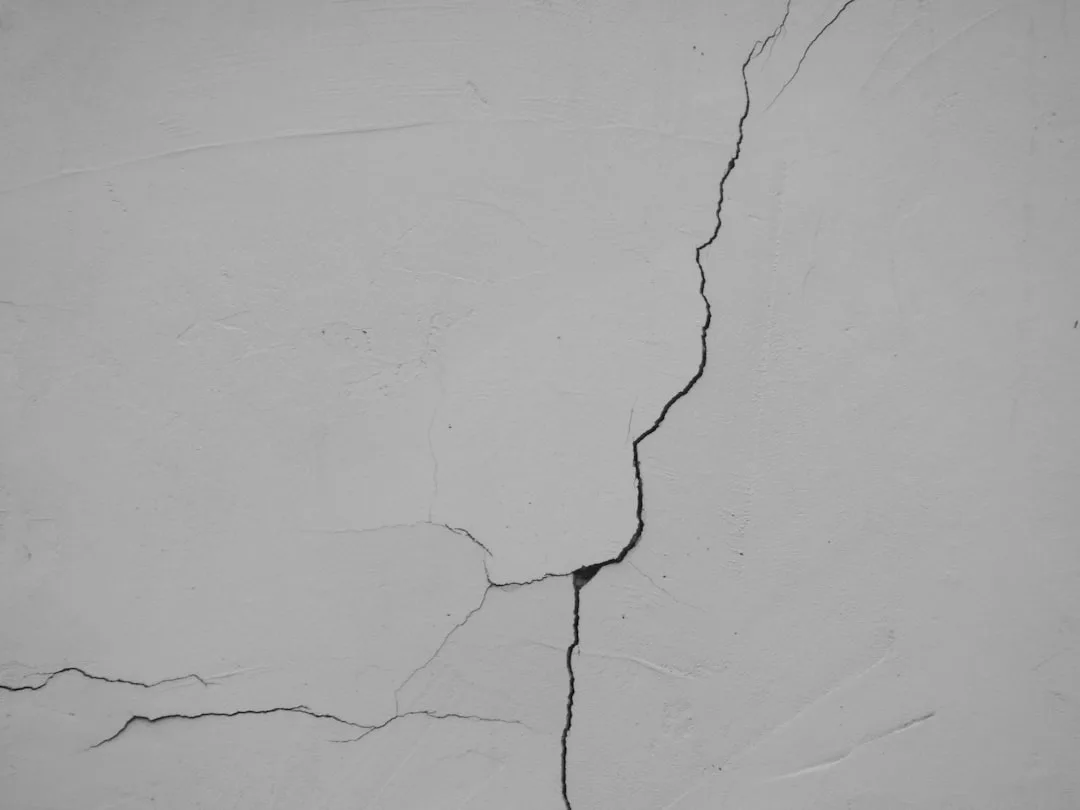
Width is only a first filter, and sources do not agree on one threshold. Ideal Home calls hairline cracks below 1 mm cosmetic and suggests investigating vertical, diagonal or horizontal cracks wider than about 3 mm. Uswitch gives 3 to 5 mm as the point to worry. A French reference, La Maison Saint-Gobain, is stricter: it treats anything beyond 0.2 mm as worth monitoring and over 2 mm as a job for a qualified professional.
The practical reading: below roughly 1 mm, check once and keep an eye on it; from about 1 to 3 mm, measure over time; above 3 mm, get advice. These are rules of thumb, not building-code limits.
Is the crack stable or still moving?
A crack that no longer changes is called passive (or stable); one that grows is active. Ideal Home suggests a low-tech test: draw pencil lines across the crack at several points, perpendicular to it, mark each end of the crack, date and photograph them, and check again after four weeks. If a line on one side has shifted away from the line on the other, ask a structural engineer.
For a longer record, a crack gauge fixed across the crack lets you read the gap every few months. The French guidance suggests every six months, more often if you are worried. One reading is not enough: a crack that opens in a dry summer and closes in a wet winter looks stable if you measure it once, and that pattern is typical of shrinking and swelling clay soil.
What do different crack patterns point to?
- Stepped or diagonal cracks following mortar joints, often wider at the top, or running from the corner of a window or door, can indicate subsidence.
- Doors and windows that stick or no longer close properly, sloping floors or a gap between floor and skirting point the same way.
- Fine vertical cracks near frames can come from thermal movement: brick, plaster and timber expand and contract with temperature.
- Shrinkage cracks at mortar joints can come from the mortar itself. The French building-quality agency AQC links this kind of shrinkage to excess mixing water.
Rule of thumb: the closer a crack is to a window corner, a floor line or an extension joint, the more likely the cause is structural rather than in the render.
In what order should you repair a facade crack?
- Measure first with pencil marks or a gauge, and write down the date.
- If the crack is active, treat its cause (structure, drainage, ground) on the advice of an engineer or surveyor.
- Repair only a stable crack: clean it, open it slightly, brush out dust, then fill it with a suitable exterior filler.
- Where a crack recurs at a floor level in a rendered wall, French guidance describes a render reinforced with mesh or fabric extending 0.15 m beyond the crack on each side.
Avoid filling the same crack again and again; Uswitch notes that repeated filling of a crack that reopens is a warning sign in itself. As a rough guide, the French source quotes 600 to 900 euros for a full study with a report and six-monthly monitoring; local prices elsewhere will differ.
Should you add decorative trim to a cracked wall?
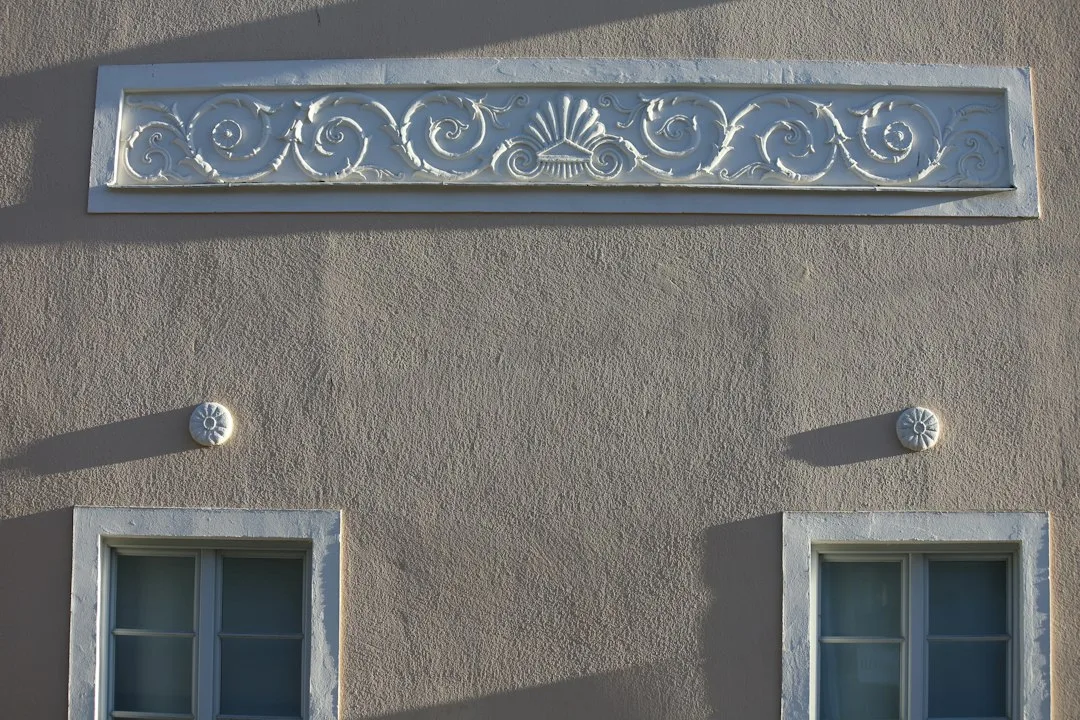
Cornices and exterior moldings need a wall that has stopped moving, because they are bonded to the surface. Settle the cracks first, keep the dated photos as a record, and add the trim afterwards. A stable, repaired wall with a hairline crack is not a reason to give up on decoration.
Sources
- Ideal Home: When to worry about cracks in walls
- Uswitch: Cracks in walls, when should you worry
- La Maison Saint-Gobain (France): facade cracks
- AQC (France): pathology sheet B.03