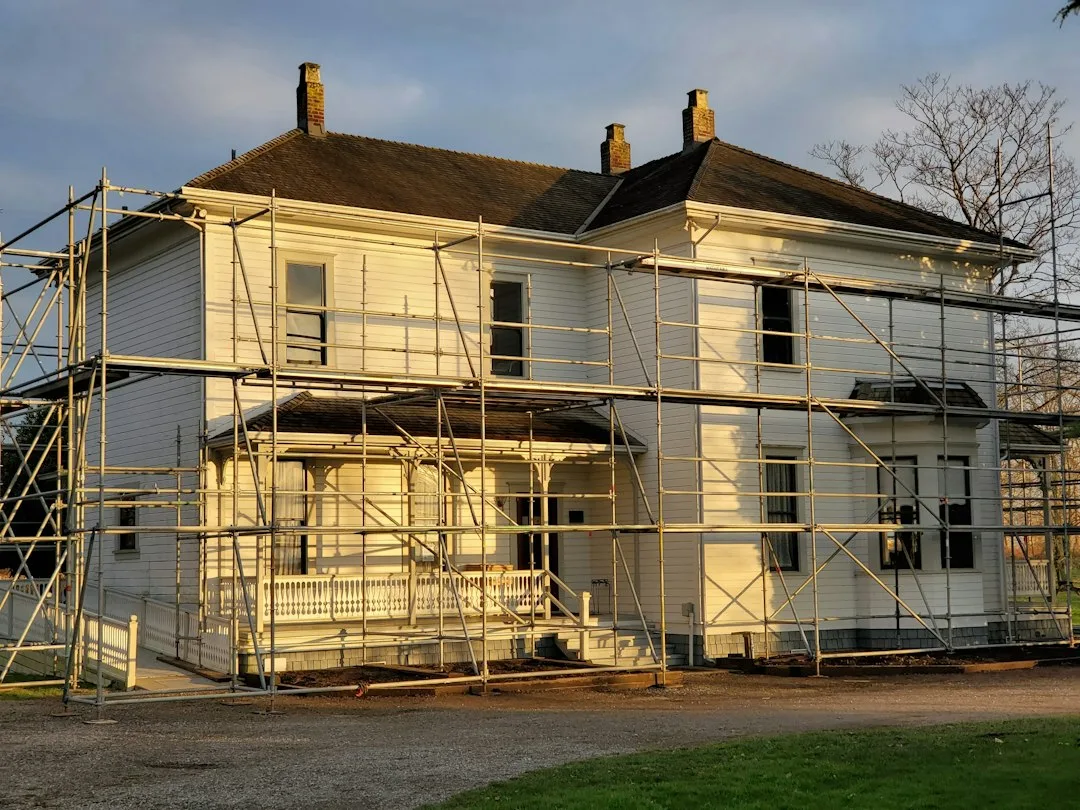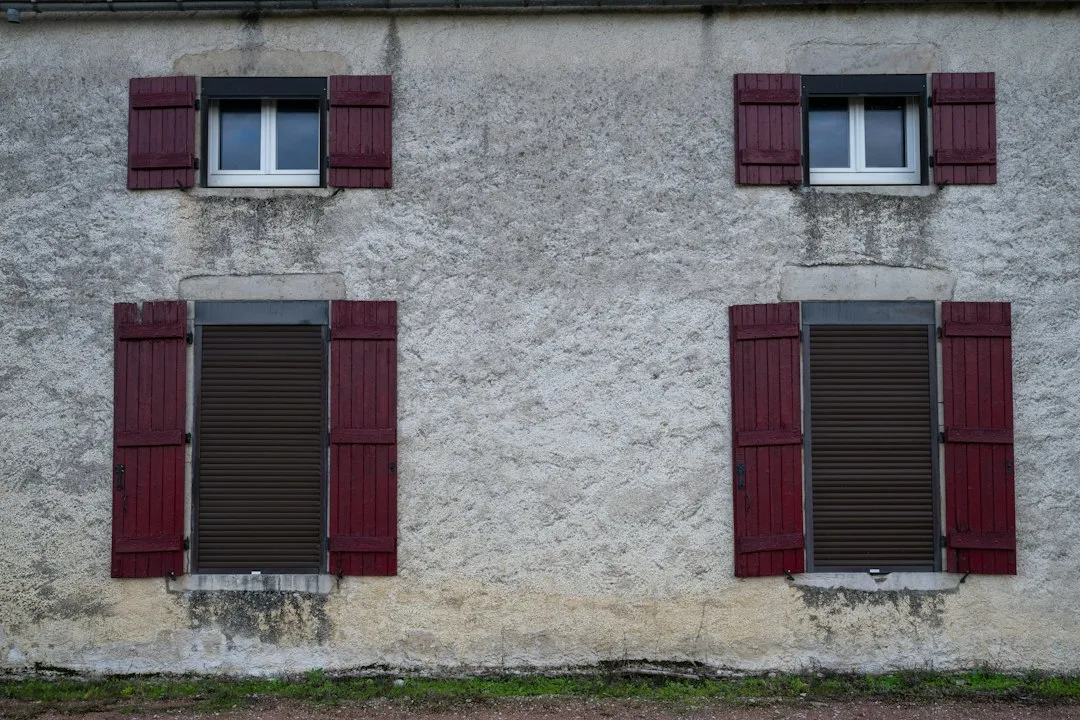

You have picked the perfect shade: a sandy beige for the wall, pearl grey for the surrounds, white moldings that stand out. Then the town hall says the beige is not on the approved palette, or that the heritage architect would prefer something else. The problem is rarely taste. It is the order in which the decisions were made.
Here is how planning rules shape the color of a facade, and what to check before buying any paint or decor. The framework below is French; if you own a house elsewhere, the principle is the same but the rules and authorities differ.
A color change counts as a change of appearance
French planning law (article R421-17 of the Code de l'urbanisme) requires a prior declaration for work on an existing building that changes its exterior appearance. Repainting or re-rendering in a different shade falls under it, as does switching cladding material. A like-for-like refresh, same color and same material, is more often treated as maintenance, but some municipalities have made it subject to a declaration, and protected areas have their own requirements.
The practical rule fits in one sentence: never assume it is "just paint". A call or visit to the town hall planning office, with the plot address, tells you which regime applies.
The local plan: the document that talks about your colors
The local urban plan (PLU) includes a chapter on the exterior appearance of buildings. Depending on the town, it sets rules on materials, render shades, joinery, shutters and fences. Some towns attach a color chart; others settle for general wording such as "shades in harmony with the surrounding buildings".
The vague wording is the trickiest, because it leaves room for judgement by the planning officer. When the text is unclear, study neighboring facades and ask to see examples of approved files. The PLU regulations can be read at the town hall and, increasingly, on the national Géoportail de l'urbanisme.
Near a listed monument: the heritage architect's opinion
If your house lies within the surroundings of a listed monument (the perimeter can reach 500 meters, or follow an adapted boundary, and includes co-visibility) or in a protected heritage area, the file goes to the Architecte des Bâtiments de France (ABF). In those areas the opinion weighs heavily: the town hall generally cannot grant approval against an unfavorable opinion, except through an appeal to the regional prefect.
The ABF may ask for a specific shade, sometimes given as a RAL or NCS code, or for a particular material such as a lime render rather than a synthetic one. Those requirements are binding. Plan ahead: bring a sample, a photo of the surroundings and, if possible, a color simulation rather than a catalog reference alone.
The timing to build into your schedule
For a prior declaration, the standard review period is one month. It becomes two months when an ABF opinion is required. These periods can be extended if the file is incomplete or an extra consultation is needed. In practice, allow generous margins: scaffolding hired too early or a tradesman booked for the wrong week costs more than waiting.
Start work only once the decision is secured, and keep the decision notice or the acknowledgement of receipt. The exact rules on administrative silence vary by area; in a protected perimeter, ask for written confirmation.
Where EPS decor fits in
Decorative elements added to a facade (moldings, window surrounds, cornices, bands) also change its exterior appearance. They belong in the same file as the color, with their dimensions, projection and final shade. An application that mentions only paint when moldings are planned is incomplete.
The acrylic protective coating on polystyrene elements can be tinted to match the chosen palette, which helps you stay within the imposed colors. For a house in a protected area, restrained profiles and a shade close to the render usually go down better than strong contrast. You can compare profiles on our pages about exterior moldings or foam ornaments.
A five-step method before you paint
- Check the zoning and the PLU regulations for your plot (exterior appearance, colors, materials).
- Find out whether the house is near a listed monument or in a protected heritage area.
- Gather photos, color samples and drawings of the decorative elements planned.
- File the complete declaration and wait for the decision before starting work.
- Order paint, render and decor once the shade is approved, keeping the exact references.
This sequence looks slow, but it avoids the most expensive scenario: a finished facade that has to be redone because the shade breaks the rules. Penalties for unauthorized work come under the planning code and can include an order to restore the original state; amounts and procedures should be confirmed with the town hall or a professional.
Finally, remember that a palette is a boundary, not a design. Within a handful of approved shades there is plenty left to decide: the balance between wall, surrounds and joinery, the sheen, the effect of north or south light. Always test a sample of at least one square meter on the wall, look at it at several times of day, and only then decide. That final adjustment is what separates a compliant facade from a successful one.