To create a decorative facade on a house, start with what structures the wall — the base, the horizontal lines (band, cornice) and the corners — then dress the windows and doors, and add ornament only at the end, in the places those lines already point to. That order prevents the most common mistake: a front covered in details that do not relate to each other. Before changing how the outside of your house looks, check what your local planning rules allow.
Inspiration galleries show finished facades. They rarely explain the order in which the decisions were made, or why the same molding looks right on one house and stuck-on next door. That is what this guide covers.
What makes up a decorative facade, and what each part does
Every decorative element first helps the eye read the building. Knowing that role lets you choose fewer pieces, and better ones.
- Base (plinth): grounds the house. A change of tone or texture is often enough.
- Band (string course): a horizontal line between floors. It breaks up a tall wall and lines up the upper windows.
- Cornice: finishes the wall under the roof. Without one, a rendered or stucco wall often looks unfinished at the top.
- Quoins: mark the corners and give the house a sense of weight.
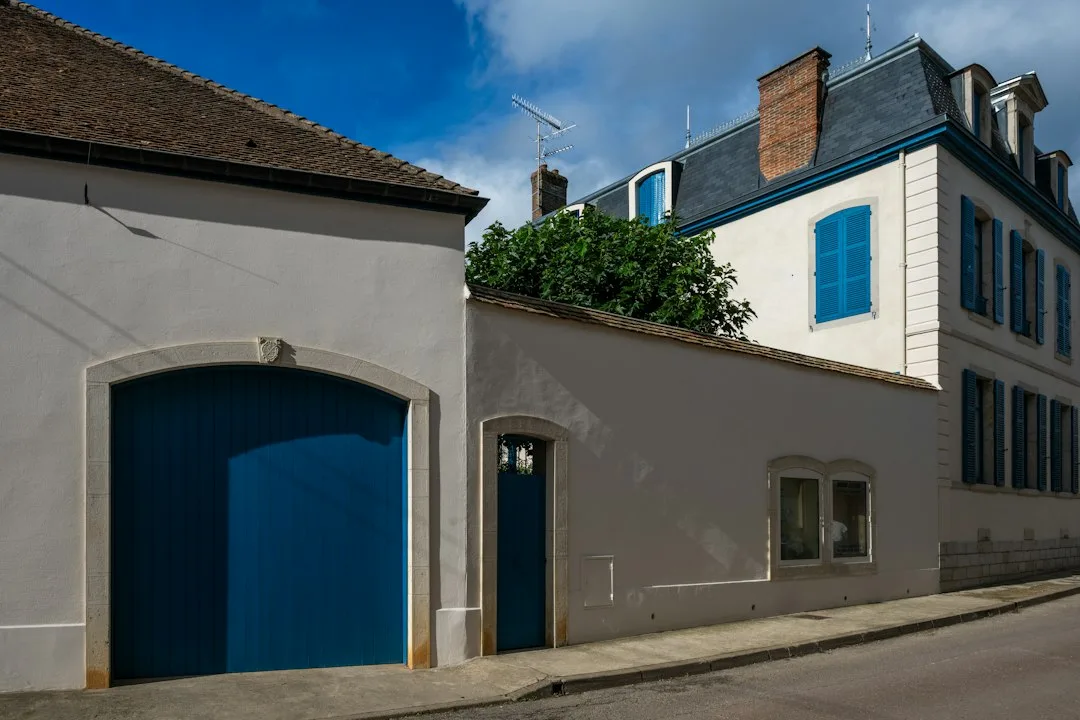
- Window and door surrounds, sills, keystones: add depth around the openings, the parts of a facade people look at first.
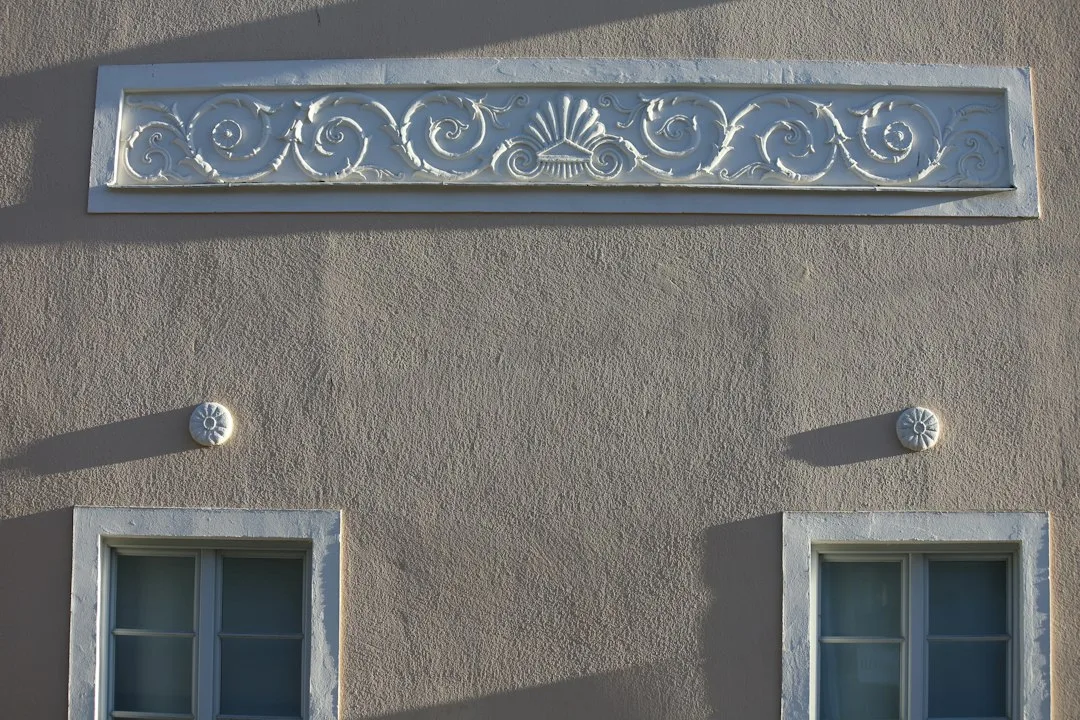
- Ornaments (corbels, cartouches, garlands, pediments): accents, placed where the structure justifies them — over the entrance, under a balcony, on the axis of a bay.
The order to decide in: structure, openings, accents
Take a straight-on photo of the house, print it or show it large on a screen, and sketch three layers over it.
- Structure. Find the lines that already exist: the upper floor level, the eaves, the corners. These are the natural places for a band, a cornice and quoins. If a line is not part of the building, do not invent one.
- Openings. Pick one type of surround and use it on every window of that elevation. Vary by hierarchy, not by style: the front door and main windows get one extra element (a keystone, a window crown), never a different design.
- Accents. One or two focal points are usually enough, normally on the axis of the entrance. If you need to explain why an ornament is where it is, it is probably one too many.
A worked example: a two-storey house with three windows upstairs, two windows and a door downstairs. Structure: a cornice under the roof and a band at first-floor level. Openings: five identical surrounds plus a keystone over the door. Accents: nothing else. The front reads at a glance, and it is already a decorative facade.
Three mistakes that clutter a facade, and why they happen
1. Decorating the street front and forgetting the sides. Why: the design is drawn from a straight-on photo, but people usually see a house at an angle. A cornice that stops dead at the corner is more noticeable than no cornice at all. Return at least the cornice and the quoins around the corner.
2. Mixing styles from one window to the next. Why: pieces are picked one at a time from a catalog. A neoclassical surround next to an Art Deco profile breaks the unity. Fix the style once, then vary only the amount of decoration.
3. Profiles too slim for the height of the wall. Why: a sample in your hand looks big, but seen from the street several metres up, it shrinks. Before ordering, cut the profile's outline to full scale in cardboard, tape it to the wall and look at it from across the street. It is the most reliable test and costs nothing.
Which material for exterior decoration?
Stone and cast concrete suit new buildings designed to carry them, but their weight calls for anchors and a wall that can take the load. On an existing house, coated EPS (expanded polystyrene) foam decor is often easier to install: it is light, fixes onto the prepared render or substrate, and is painted along with the rest of the facade.
ArtFacade's EPS elements are reinforced with a protective layer for exterior use and arrive ready to install and paint. Any profile can be made to the size you need while keeping its proportions, which deals with mistake no. 3 at the ordering stage. The exterior moldings come with pre-installed spacers and can be fixed with nails, screws or adhesive, and foam quoins can be rendered to look like stone.
How to preview the result before you order
A sketch over a photo is enough to settle the order of decisions. To judge proportions and colours, a 3D visualisation on a photo of your own house works better: it shows the decor, the wall colour and the roof together, so sizes can be adjusted before anything is made.
Do you need permission to change the look of your facade?
It depends on where you live, so check with your local planning authority first. As one example, in England the Planning Portal says painting and minor improvements need no permission, and cladding a house is allowed without an application outside protected areas if the materials look similar to those used in its construction. In a conservation area, National Park, Area of Outstanding Natural Beauty or the Broads, you must apply before cladding with stone, artificial stone, render, timber, plastic or tiles, and a listed building needs listed building consent for any significant work. In France, the local urban plan (PLU) at the town hall sets the rules. Other countries and US towns and HOAs have their own design rules, so ask before you order.
Sources
- Planning Portal: External walls — planning permission
- Planning Portal: Do I need planning permission to render the outside of my house?
- ArtFacade: exterior foam molding