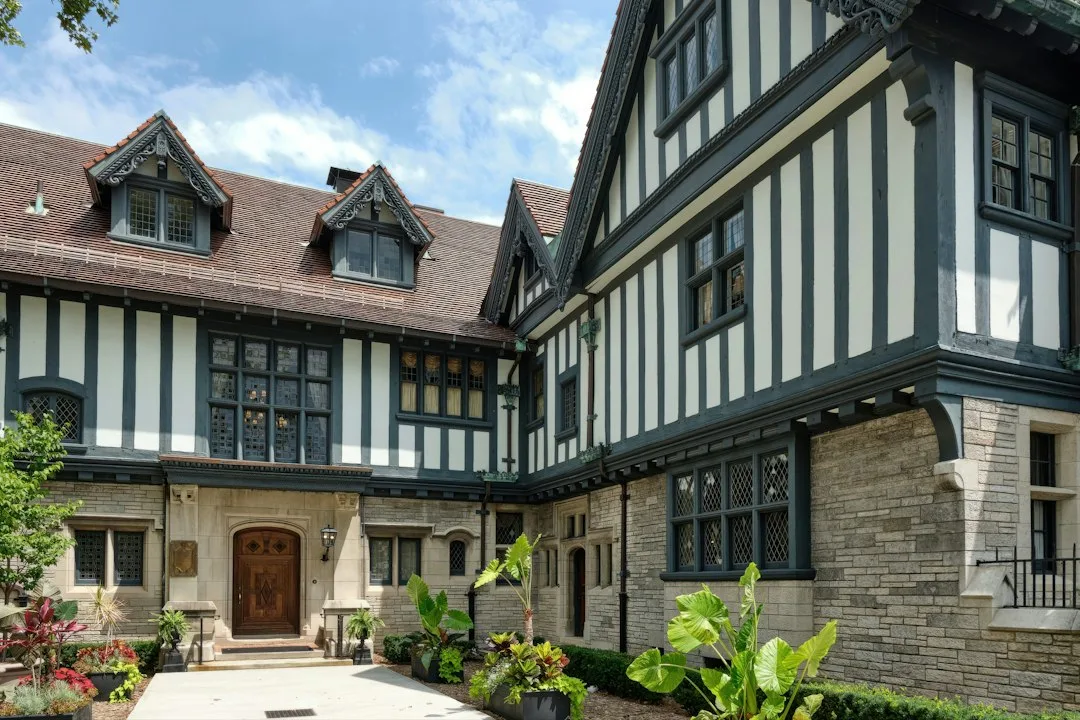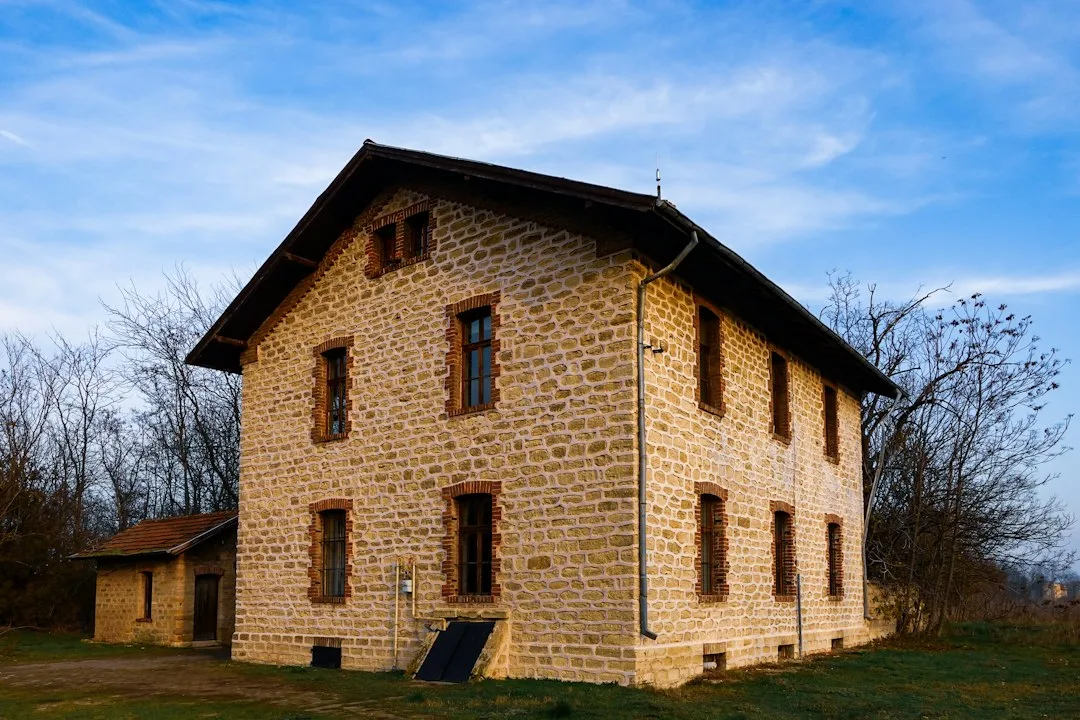
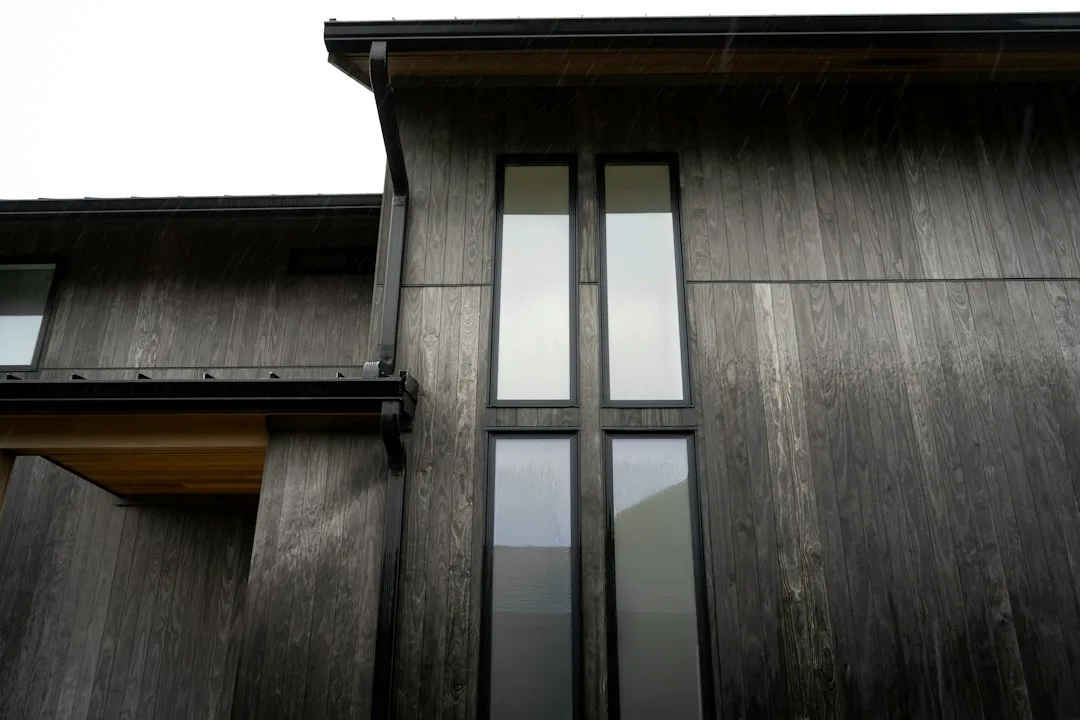
A dark matte facade can look striking on handover day and grey within one wet season. The cause is not poor paint. It is the way matte texture and dark pigment interact with ordinary city air and rainfall.
Why the 2026 shift toward dark matte is so popular
Charcoal, anthracite and deep bronze-black finishes have become the default request for new builds and renovations across Europe and North America. Architects like them because they sharpen window reveals, mouldings and shadow lines. A dark wall reads as a single calm plane, which suits the minimalist and contemporary-rustic styles that dominate current design magazines.
Decorative elements benefit too. Exterior foam mouldings, window sills and cornices gain more relief when the surface is dark, because the shadows they cast become deeper. This is one reason designers pair dark render with light-independent details such as exterior foam moldings that can be painted to match the field colour without losing their profile.
The physics behind faster visible soiling
Three factors work together. First, matte finishes are intentionally rough at the micro level, which diffuses light and hides imperfections. That same roughness gives dust, pollen and soot particles many small pockets to sit in. Second, dark pigments absorb more radiant heat, so the wall surface warms and dries unevenly, which encourages thin films of dirt to bond. Third, dark colours expose contrast: a deposit that would be invisible on a pale render shows clearly as a grey bloom.
The result is a pattern contractors recognise. A dark matte wall often looks clean for several months, then shows a uniform haze, then streaks below sills and along downpipes. The haze is not new damage. It is the same grime that was always landing on the wall, now made visible by the colour.
Where the streaking actually starts
Dirt rarely spreads evenly. It concentrates where water runs off and where it stalls. Field experience shows the worst zones are the underside of window sills, the wall below projecting cornices, the area under roof overhangs that receive only partial rain, and the lines beneath downpipes. Each is a place where moisture either washes dirt down in dark tracks or evaporates and leaves a deposit behind.
Sill geometry matters enormously here. A sill with insufficient fall holds water against the face of the render, which both stains and loads the surface. Detailing guidance on sill slope and drip edges is covered in depth in our article on window sill slope and wall protection, and getting those details right is the cheapest way to keep dark walls clean.
Choosing a finish that resists dirt
Not every dark render behaves the same. Acrylic-based matte renders are the most common and the most prone to dirt pickup, because their surface is porous and relatively high in friction. Mineral silicate renders are breathable and chemically bonded to the substrate, so they tend to age more evenly, although they still show soiling in dark tones. Silicone-based finishes have lower porosity and shed dirt more readily, which is why they are often specified for dark colours in exposed locations.
For decorative work over EPS, the topcoat selection is equally important. Elastomeric paints in a satin sheen give a good balance of depth and washability. A reliable option for the mouldings themselves is decorative window sills that accept a flexible, breathable coating, which keeps the profile intact through thermal movement.
| Finish | Surface texture | Dirt visibility | Typical cleaning interval |
|---|---|---|---|
| Dark matte acrylic render | Fine porous grain | High | Every 1-2 years |
| Light matte render | Fine porous grain | Low to moderate | Every 3-4 years |
| Dark satin silicone render | Smoother, lower porosity | Moderate | Every 3-5 years |
| Dark mineral silicate render | Porous, breathable | Moderate | Every 2-3 years |
| Painted EPS with elastomeric coat | Smooth to fine grain | Moderate | Every 2-4 years |
Specifying and maintaining dark matte walls over 5-10 years
Plan for cleaning from the start rather than reacting to it. A realistic programme for a dark matte facade involves a gentle wash every one to two years, using low-pressure water (well below the pressure that would strip the finish), a pH-neutral detergent and soft brushing on the lower storeys where traffic splashes occur. Avoid pressure washers set above a light rinse setting, because they abrade the matte texture and create a rougher surface that soils even faster.
Specify a sound substrate and a breathable base. Dark topcoats over trapped moisture develop algae and biological growth, which look like dirt but behave differently and require biocide treatment. Make sure the system underneath allows vapour to escape, and that the render or EPS is fully dry before the finish coat is applied.
Finally, balance the palette. A dark field with lighter detailing, or a dark base with a slightly warmer tone at the high points, can disguise weathering better than a single flat colour. Pale mouldings, sills and corners break up the wall and make localised staining less conspicuous, while keeping the overall look current.
What to tell clients before the first coat
Set expectations early. A dark matte facade is a legitimate design choice, but it carries a predictable maintenance cost. Explain that the wall will look dirtier sooner than a light equivalent, that cleaning is part of the specification, and that the finish sheen and sill detailing will determine how often it is needed. Clients who understand this at the start rarely feel misled when the first haze appears.