
A seafront wall can age twice as fast as the same wall a few kilometres inland, and the clearest warning sign is rarely the paint. It is the fixings, the joints and the corners, where salt crystals work their way in quietly. Contractors on the coast often describe the same pattern: the wall looks fine for a season, then staining and small spalls appear where no one was looking.
Why salt air behaves differently from rain
Rain washes a facade; salt aerosol accumulates on it. Onshore winds carry microscopic droplets of seawater inland, and these droplets evaporate and leave behind chloride salts. Those salts are hygroscopic, meaning they draw moisture from the air and keep surfaces damp longer than normal weather would.
Chlorides attack steel reinforcement, corrode metal fixings and feed crystallisation damage inside porous render. A wall that dries slowly and absorbs salt in winter will expand and contract with each freeze-thaw cycle, which is why coastal failures often show up as surface flaking rather than a clean structural crack.
Choosing a finish that survives the sea
The most reliable coastal finishes are mineral-based and vapour-open. Lime render and silicate paint allow the wall to breathe, so moisture moves out instead of building up behind an impermeable skin. Acrylic renders can perform acceptably, but any hairline crack lets chlorides in, and the sealed film then traps them.
Field experience shows that the most common error is applying a low-permeability coating over a porous base. The coating blisters within two or three seasons because vapour cannot escape. Check the permeability ratings of each layer before you commit, and make sure the system is designed as a whole rather than assembled from separate products.
| Material | Salt air resistance | Typical problem | Maintenance rhythm |
|---|---|---|---|
| Lime render (natural) | Good when breathable and sealed | Efflorescence, salt crystallisation | Repaint or re-seal every 3-5 years |
| Silicate mineral paint | Very good | Chalking if applied over incompatible base | Recoat every 8-12 years |
| Acrylic render | Moderate | Microcracks let salt in | Inspect yearly, refinish every 6-10 years |
| Stainless or hot-dip galvanised fixings | Excellent | Poor-grade steel corrodes and stains | Check fixings every 2-3 years |
| Expanded EPS mouldings with mineral finish | Good with correct sealing | Joint failure if adhesive or sealant is wrong | Inspect joints yearly, repaint 8-10 years |
Fixings, joints and corners: where marine damage starts
Standard zinc-plated screws can rust through within a few years in a salt environment, staining the surface and loosening the anchor. Specify stainless steel (grade 316 is the usual recommendation for marine exposure) or hot-dip galvanised fixings, and use the same metal family throughout to avoid galvanic corrosion between dissimilar metals.
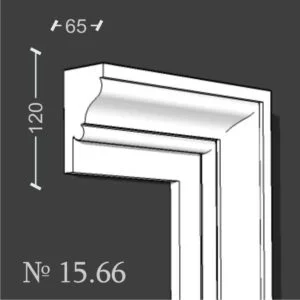
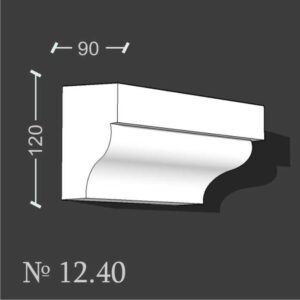
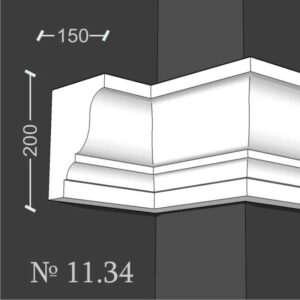
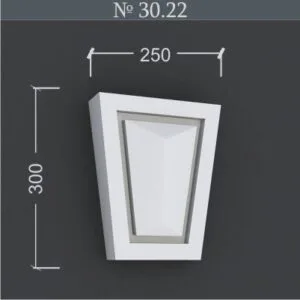
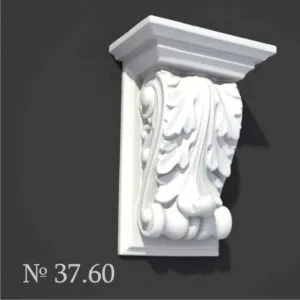
Decorative elements add another layer of detail. Exterior foam moldings and decorative window sills look excellent on a seafront house, but their long-term performance depends on how they are bonded and sealed. Use a compatible adhesive, encapsulate the EPS fully in a mineral base coat, and seal every joint with a flexible, UV-resistant sealant. Corners and quoins deserve special attention, since wind-driven salt concentrates on exposed edges. Architectural corbels and decorative columns are similarly vulnerable at their junctions with the wall, where water tends to pool.
Maintenance rhythm to plan from day one
Build a maintenance calendar into the project budget rather than treating it as an afterthought. Inspect joints, sealant lines and fixings once a year, ideally after winter. Rinse the windward elevation with fresh water several times a year to remove accumulated salt before it works into the surface. Plan to recoat mineral paint roughly every eight to twelve years, and check sooner if you see chalking, efflorescence or new hairline cracks.
Cracks deserve prompt attention because a small opening lets salt penetrate deeper. If you find recurring cracking, treat the cause rather than repeatedly patching the surface, as the underlying movement or moisture source will keep reproducing the symptom. For a deeper look at this problem, see why facade cracks keep returning.
Protecting the value of a coastal facade
A well-chosen and well-maintained coastal facade protects more than the wall itself. Visible staining, spalling and failed sealant reduce buyer confidence and invite lower offers, even when the structure is sound. Maintaining the envelope from the first year keeps repair costs small and predictable. Spreading maintenance over the life of the finish is almost always cheaper than letting damage accumulate and then doing a full strip-and-recoat.
In short, the climate effectively chooses your maintenance schedule before you do. Select breathable mineral finishes, specify marine-grade fixings, detail every junction carefully, and schedule annual inspections. Doing so turns a facade that would otherwise age twice as fast into one that ages at the rate its materials were designed for.